How Should Shoes Fit? A Complete Guide to Proper Shoe Fit

The question of how shoes should fit sounds simple, yet a remarkable number of people have never worn a properly fitting pair, and so have no reference for what correct feels like. Understanding proper shoe fit is one of the easiest ways to avoid discomfort and unnecessary sizing mistakes. A good fit is quiet — you stop noticing the shoes entirely. A poor one announces itself with every step, in a pinched toe or a slipping heel. This guide describes precisely how a well-fitting shoe should feel at the toe, the heel, the width, and the instep, and how to recognize shoes that fit perfectly the moment you put them on. Learn these signs, and you need never tolerate an uncomfortable pair again.
Signs a Shoe Is Too Small
- Toes touch the front.
- Pressure across the ball of the foot.
- Tingling or numbness.
- Persistent rubbing.
- Pain after a short walk.
If you experience several of these signs together, the shoe is likely too short or too narrow rather than simply needing to be broken in.
Signs a Shoe Is Too Large
- Heel slipping.
- Foot sliding forward.
- Excessive creasing.
- Need to lace unusually tight.
- Lack of control while walking.
Shoes that are too large reduce stability, increase friction, and often cause blisters over time.
The Marks of a Proper Fit
Asking how shoes should fit is really asking about four things at once: the room at the toe, the hold at the heel, the snugness across the width, and the support over the instep. A shoe that gets all four right disappears on the foot. Get any one wrong, and the whole pair feels off, however fine it looks. The sections below take each in turn. These four checkpoints form the basis of correct shoe fit, regardless of shoe style.
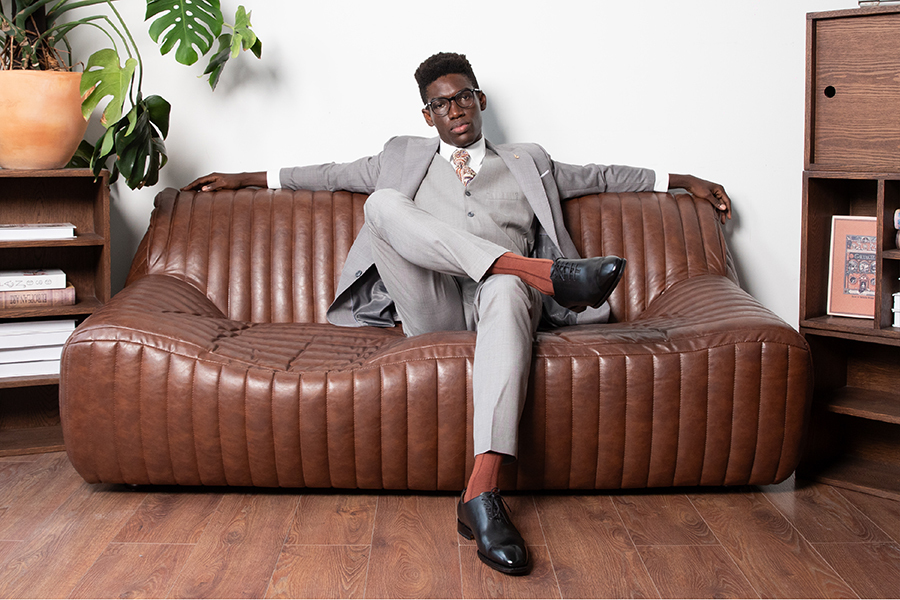
A well-fitting shoe is quiet — toe room, a firm heel, a snug width, and a supportive instep, all at once
At the Toe
There should be roughly a thumb's width — about one to one-and-a-half centimeters — between your longest toe and the end of the shoe. The longest toe is not always the big toe, so always measure based on whichever extends furthest. Your toes should lie flat and wiggle freely; they should never press against the front. Too little room and the toes are crushed with every step; too much and the foot slides forward. This small gap is the single most important measure of a good fit.
At the Heel
The heel should be held firmly, with only the slightest movement as you walk. Heel security is especially important for leather dress shoes because they soften slightly during break-in. A little initial slip in a new leather shoe is normal and usually settles as the pair breaks in, but pronounced slipping means the shoe is too large or too wide at the back. A secure heel is what keeps the whole foot properly placed within the shoe.
Across the Width
The shoe should feel snug across the ball of the foot without pinching. A properly fitted shoe should allow your toes to spread naturally without pressure. You should feel gently held, never squeezed. Width problems are the most common and the most overlooked — many people size up to relieve a tight width, which only creates a heel that slips. The real fix is the correct width, as our shoe width guide explains.
Over the Instep
The instep — the top of the foot, where laces or a strap sit — should feel supported but not compressed. People with high insteps may require a different last or a more adjustable lacing system. For lace-ups, you should be able to tighten to a comfortable hold without the eyelets being pulled fully together, which would signal too low a volume. A shoe that fits the instep well feels secure without pressure.
How Different Shoe Types Should Fit
Although the basic principles of proper shoe fit remain the same, different styles are designed with slightly different characteristics. Understanding these differences helps you judge whether a shoe fits as intended.
Oxford Shoes
Oxfords feature a closed-lacing system that provides a clean, elegant appearance but offers less adjustment across the instep. They should feel secure from the moment you lace them up, with only a small, even gap between the eyelets. If the eyelets are pulled completely together, the shoe is likely too wide or too high in volume. If they remain excessively far apart, the shoe may be too narrow.
Loafers
Loafers have no laces to fine-tune the fit, so they should feel slightly snug when new. A properly fitted loafer should stay securely on your foot without requiring you to grip with your toes while walking. Slight firmness is normal; excessive heel slip is not.
Boots
Boots rely on elastic side panels rather than laces. They should slide on with light resistance and feel secure around the heel and instep once worn. The elastic should hold the foot comfortably without creating pressure across the ankle.
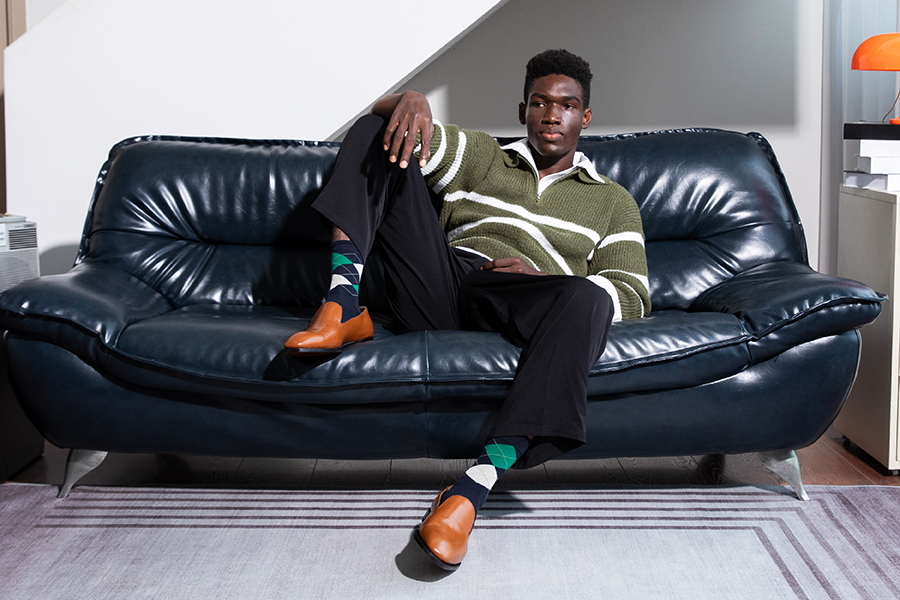
How Shoes Should Feel When Walking
A perfectly fitting shoe reveals itself in motion, not just standing still. Walking reveals problems that standing still cannot. As you walk, the heel should stay put — lifting cleanly with your foot rather than slipping up and down — while the ball of the foot flexes with the shoe's natural break point, not behind or ahead of it. Your toes should have room to press forward slightly on each step without hitting the end, and the shoe should feel planted and secure, never sloppy or loose. There should be no pinching at the sides, no pressure across the instep, and no rubbing at the back. In a word, a well-fitting shoe should feel like an extension of your foot: you walk normally and forget you are wearing it. Any sensation that draws your attention — a slip, a pinch, a rub — is the shoe telling you the fit is off.
A Quick Fit Checklist
|
Area |
A good fit |
A poor fit |
|---|---|---|
|
Toe |
~1 thumb's width of room |
Toes touch the end, or slide |
|
Heel |
Held firm, minimal slip |
Pronounced slipping |
|
Width |
Snug, gently held |
Pinching or squeezing |
|
Instep |
Supported, not pressed |
Compressed, or too loose |
Use this checklist whenever trying on new shoes, whether in-store or at home.
Should New Shoes Feel Tight?
One of the most common questions buyers ask is whether a new pair of shoes should feel tight at first. The answer is no, but they should feel snug.
A properly fitting leather shoe should gently hug your foot without causing pain, numbness, or excessive pressure. Your toes should have room to move naturally, your heel should stay secure, and the width should feel supportive rather than restrictive.
It is normal for high-quality leather to soften slightly after several wears. As the material molds to the shape of your foot, the shoe often becomes even more comfortable. However, leather does not stretch enough to compensate for an incorrect size or width. A shoe that pinches your toes, compresses the sides of your foot, or causes pain on the first wear is unlikely to become the perfect fit through breaking in alone.
A small amount of heel movement during the first few wears is also common with leather dress shoes, provided the shoe otherwise fits correctly. This usually decreases as the sole becomes more flexible and the upper adapts to your foot. Pronounced heel slip, however, indicates that the shoe is too large or too loose around the heel.
As a simple rule, a new shoe should feel comfortably secure—not painfully tight, and never noticeably loose.
When to Trust the Fit, and When to Size Differently
Try shoes on in the evening, in the socks you will wear, and walk in them before deciding. Never expect leather to compensate for an incorrect size. A new custom leather shoe will give a little as it breaks in, but it should be comfortable from the first wear — leather softens; it does not stretch a full size. If a shoe is wrong in two areas at once, it is the wrong shoe, not one that merely needs breaking in.
Frequently Asked Questions
How much room should be at the end of a shoe?
About a thumb's width — roughly one to one-and-a-half centimeters — between your longest toe and the front of the shoe. Your toes should lie flat and move freely, never pressing against the end.
Is it normal for new shoes to slip at the heel?
A slight heel slip in new leather shoes is normal and usually settles as they break in. Pronounced or persistent slipping, however, means the shoe is too large or too wide and will not improve with wear.
Should shoes feel tight at first?
Snug, yes; tight, no. A good shoe feels gently held from the first wear. Genuine tightness or pinching is a sign of the wrong size or width, not a fit that will break in.
Conclusion
The answer to how shoes should fit comes down to four key signs: a thumb of toe room, a firm heel, a snug width, and a supported instep. Learn to read them, and you can tell shoes that fit perfectly from the first step. For a fit that meets all four by design, consider made-to-measure shoes built to your own measurements.