Shoe Width Guide: The Right Fit for Wide Feet

Finding wide-foot shoes that actually fit is one of the most common yet least discussed frustrations in footwear. Most shoes are built to a single standard width, which leaves a great many people choosing between a shoe that is long enough but painfully tight, or one sized up so far that it slips at the heel. Neither is a real fit. This shoe width guide explains how width sizing works, how to measure your own foot width at home, and how to find comfortable leather shoes that respect the actual shape of your foot — not just its length. Many people believe they need a larger shoe size, when the real solution is often choosing the correct shoe width.
What Are Wide Feet?
“Wide feet” simply means feet that are broader across the ball and forefoot than the standard width a given shoe length is built for. Width is measured across the widest part of the foot — the ball — and is expressed as a letter (see the chart below). A foot can be an average length yet still be wide, which is why length alone never tells the whole story. Wide feet affect sizing in a specific way: because most shoes are built only in a standard (medium) width, a wide-footed wearer often sizes up to relieve the tightness, gaining length they do not need and a heel that slips. The real answer is not a longer shoe but a properly fitted wide-fit shoe.
Signs You Have Wide Feet
- Shoes feel tight across the ball of the foot.
- Your toes feel compressed.
- The sides of your feet bulge over the sole.
- New shoes require an unusually long break-in period.
- You regularly buy a larger size just to gain extra room.
If several of these signs sound familiar, measuring your shoe width is the next step. Many people discover they have wide feet only after years of wearing shoes that are unnecessarily long.
Why Width Matters as Much as Length
Length tells you whether a shoe is long enough, while shoe width tells you whether it will be comfortable. For anyone seeking wide-foot shoes, width is the decisive measurement, because a shoe of the right length in the wrong width pinches across the ball of the foot — the most common cause of discomfort and the reason so many fine shoes go unworn. A shoe must fit the whole foot, not merely its longest point. Width also affects stability, walking comfort, and how naturally your toes can spread inside the shoe.
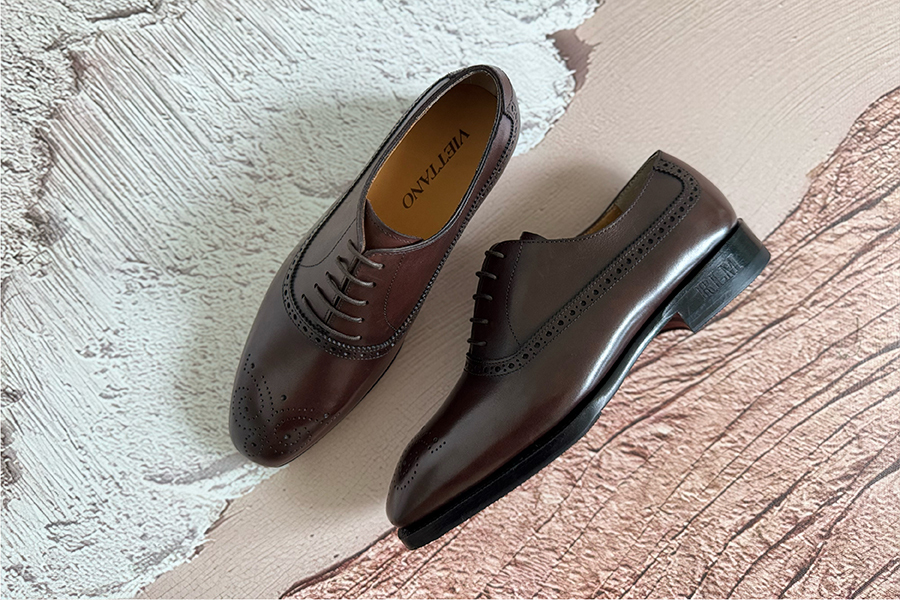
Length decides whether a shoe is long enough; width decides whether it is comfortable.
How Shoe Width Sizing Works
Width is usually expressed as a letter, from narrow to wide. In the common US system, the order runs roughly: AA (narrow), B (standard narrow), D (standard/medium), E, EE, and EEE (progressively wider). A shoe marked D is the default medium width for men; anything beyond E is built for genuinely wide feet. The trouble is that most shops stock only D, which leaves wider feet poorly served.
|
Width letter (men's US) |
Fit |
Who it suits |
|---|---|---|
|
AA |
Narrow |
Slim feet that slip in standard shoes |
|
B |
Standard narrow |
Slightly slim feet |
|
D |
Standard/medium |
The default width most shoes are built to |
|
E |
Wide |
Feet that feel tight across the ball in D width |
|
EE |
Extra wide |
Noticeably broad forefoot |
|
EEE |
Widest |
The broadest feet, poorly served by standard shoes |
The exact measurements for each width category vary slightly by brand and shoe last, so treat the letters as a guide rather than an absolute standard. Width lettering is not always identical between brands, so always compare your measurements with each manufacturer's width guide.
Wide-Fit Shoes vs Regular Shoes
Many people assume wide-fit shoes are simply longer versions of standard shoes. They are not. Wide-fit shoes maintain the same length while providing additional room across the forefoot, toe box, and ball of the foot. Wide-fit shoes increase space across the forefoot without making the shoe longer. This allows your toes to spread naturally without sacrificing heel security. For people with broad feet, choosing wide-width shoes usually produces a much better fit than buying a longer standard shoe.
How to Measure Your Shoe Width at Home
- Trace your foot. Stand on paper with full weight and trace around the foot, pencil held upright.
- Measure across the ball. Find the widest part of the tracing — across the ball of the foot — and measure it in centimeters.
- Compare your measurements with a shoe width guide or the manufacturer's width chart. Match your length and ball width against the maker's width chart to find your letter.
For the full-length method that pairs with this, see how to measure shoe size at home.
Wide Feet vs the Wrong Shoe Size
Many people assume their shoes are too small when the real issue is width. A shoe that is too short creates pressure at the toes, while a shoe that is too narrow creates pressure along the sides of the foot and across the ball. Understanding the difference helps you choose the correct solution — a wider shoe, not a longer one. This is one of the most common reasons people believe they need a larger shoe size.
Best Shoe Shapes for Wide Feet
Some silhouettes accommodate a broad foot far better than others. Shoe shape influences comfort just as much as width. Certain lasts naturally leave more room across the forefoot than others. If you have wide feet, favor:
- Round-toe Oxfords and Derbies. A rounded toe box gives the forefoot room to spread; open-laced Derbies also adjust more generously across the instep than closed-laced Oxfords.
- Almond-toe shapes. A gentle almond toe looks refined while still leaving width at the ball — a good middle ground between round and sharp.
- Loafers with a broad last. A well-cut penny loafer on a rounder last slips on easily and avoids lacing pressure altogether.
- Chelsea and Derby boots. Their higher volume and elastic or open-laced entry suit broad feet better than a slim, closed dress boot.
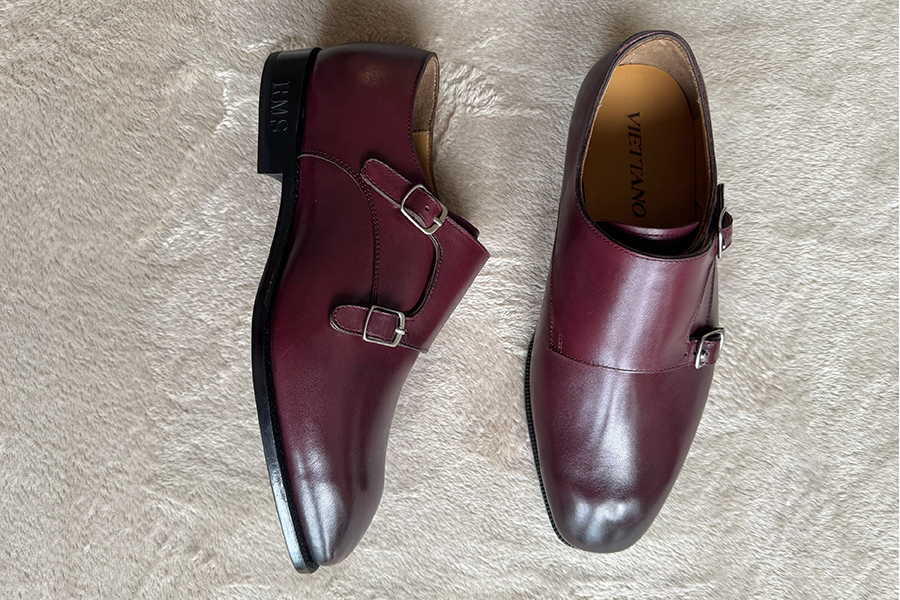
Avoid sharply pointed or very sleek toes, which crowd a wide forefoot. Better still, choose a maker that offers a genuine wide-width option on these shapes.
Tips for Finding Comfortable Wide-Fit Shoes
- Never size up for width. A longer shoe is not a wider one; it simply slips at the heel.
- Favor rounded or almond toes. Sharp, narrow toes crowd a wide forefoot.
- Choose soft, full-grain leather. Quality leather gives gently and molds to the foot over time.
- Consider made-to-measure. The most reliable answer for wide feet is a shoe built to your width from the start.
The Made-to-Measure Answer for Wide Feet
For wide feet, the cleanest solution is to stop searching the standard-width shelf and build the width in from the beginning. Made-to-measure shoes are constructed to your length and width together, which removes the usual compromise entirely. Because the shoe last is matched to your foot, a wide forefoot no longer means a tight shoe — it simply means a shoe that fits. Viettano's custom dress shoes are made to order by experienced artisans using your own measurements, so width is built in rather than compromised.
Frequently Asked Questions
How do I know if I have wide feet?
Measure the width across the ball of your foot and compare it to a width chart for your length. If your ball width falls into the E range or beyond, or if standard shoes consistently feel tight across the toes, you likely need a wider fit.
Can I just buy a bigger size for wide feet?
No — this is the most common mistake. Sizing up adds length, not width, so the shoe becomes too long and slips at the heel while still pinching across the ball. You need a wider shoe, not a longer one.
What shoes are best for wide feet?
Shoes with rounded or almond toes, soft full-grain leather, and a genuine wide-width option. Made-to-measure leather shoes are the most reliable choice, since they are built to your exact width.
Conclusion
The search for wide-foot shoes ends not with a bigger size but with the right width. Measure across the ball of your foot, never size up for width, favor rounded toes and supple leather, and consider building the width in from the start. A pair of custom leather shoes fitted to your width from Viettano is the most comfortable answer of all.