Shoe Size Chart: US vs EU vs UK Conversions
A reliable shoe size chart is essential the moment you buy shoes from beyond your own country — and almost every fine maker now sells internationally. Whether you need a shoe size conversion, a men's shoe size chart, or a guide to international shoe sizes, starting with an accurate foot measurement is the most reliable way to choose the correct size. A man's 9 in the United States is not a 9 in Britain, and neither matches the European number, which is why so many online orders arrive a size out. This guide sets out a clear US, EU, and UK conversion chart alongside foot length in centimeters, explains why the systems differ, and shows how to use your own measurement to choose correctly, wherever the shoes are made.
Why Shoe Sizes Differ Across Regions
The reason a single shoe size chart must show three columns is history: the US, UK, and European systems each developed independently, on different units and starting points. The UK and US scales both count in barleycorns (a third of an inch) but begin at different sizes, so US sizes run roughly one number above UK sizes. The European system measures in Paris points and tracks the last length directly. None is more correct than the others — they are simply different languages for the same foot. Because each sizing system measures shoes differently, there is no universal shoe number. A shoe size conversion chart acts as the bridge between these systems, allowing you to compare US, EU, and UK shoe sizes using the same foot measurement. This is why checking an international shoe size chart before ordering shoes overseas is always recommended.
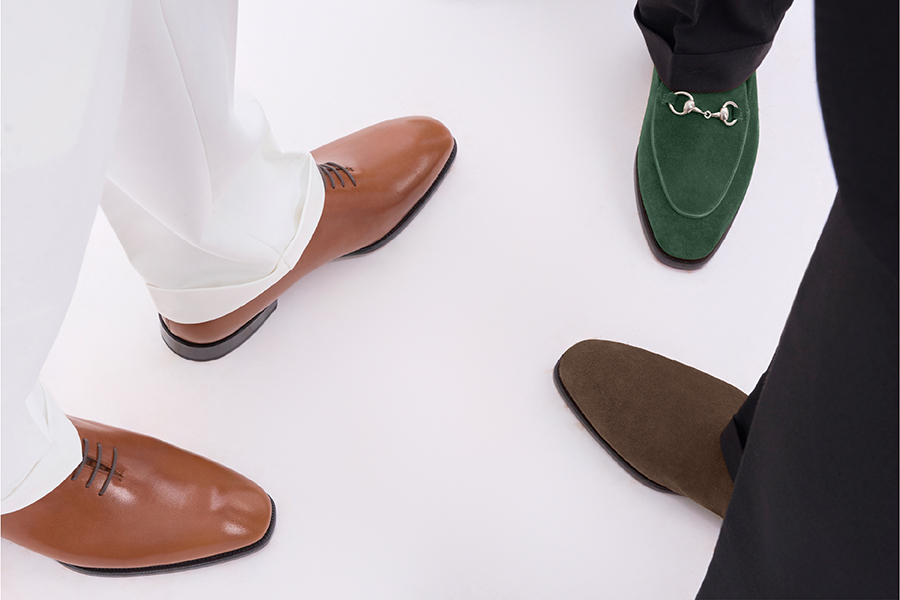
Each region's system developed separately — a conversion chart is the common translator.
Men's Shoe Size Chart: US / EU / UK / cm / inches
Shoe sizes vary between brands, but your foot length remains the same. Use the shoe size chart below as a starting point before checking the manufacturer's own sizing recommendations. For the most accurate conversion, measure your feet first and then use the men's shoe size chart below to identify the corresponding US, UK, and EU shoe sizes. (Foot length in inches is included because many US readers search by inches.)
|
US |
UK |
EU |
Foot length (cm) |
Foot length (in) |
|---|---|---|---|---|
|
7 |
6 |
40 |
25.0 |
9.8 |
|
7.5 |
6.5 |
40.5 |
25.4 |
10.0 |
|
8 |
7 |
41 |
25.7 |
10.1 |
|
8.5 |
7.5 |
42 |
26.0 |
10.2 |
|
9 |
8 |
42.5 |
26.7 |
10.5 |
|
9.5 |
8.5 |
43 |
27.0 |
10.6 |
|
10 |
9 |
44 |
27.3 |
10.7 |
|
10.5 |
9.5 |
44.5 |
27.9 |
11.0 |
|
11 |
10 |
45 |
28.3 |
11.1 |
|
11.5 |
10.5 |
45.5 |
28.6 |
11.3 |
|
12 |
11 |
46 |
29.0 |
11.4 |
Conversions are approximate and vary slightly by brand, since each maker builds on its own last. Treat this shoe size guide as a close starting point, then confirm against the specific maker's own chart. Always compare your foot measurement with the maker's own shoe size chart before ordering. This shoe size conversion chart is intended as a general reference. Premium shoemakers and athletic brands may use slightly different sizing standards.
How to Use Shoe Size Chart Correctly
The surest way to use any shoe size chart is to start from your foot length in centimeters rather than from a size you assume you are. Measure your feet first — our guide on how to measure shoe size at home shows how — then find your foot length in the right-hand column and read across. This avoids compounding one guess with another, which is how sizing errors happen. If your measurement falls between two sizes, check both width and the manufacturer's recommendations before deciding.
Why Length Is Only Half the Answer
A shoe size chart converts length, but length alone does not guarantee fit. Arch height, instep volume, and foot width all influence how a shoe feels. Two feet of identical length can need different shoes because of width and volume. Once you have your size from the chart, check the foot width as well — a correctly sized but too-narrow shoe will never be comfortable. For the fullest precision, made-to-measure shoes sidestep the chart altogether by building to your exact measurements.
Why the Same Shoe Size Can Fit Differently
Even when two brands label a shoe as US 9, the actual fit may differ because every manufacturer develops its own shoe last — the three-dimensional form used to shape the shoe. Toe shape, heel fit, instep height, and internal volume all vary between lasts, meaning identical size labels do not always produce identical fits. This is why a shoe size chart provides an excellent starting point, but checking each maker's own sizing guidance remains worthwhile. This explains why experienced shoemakers recommend measuring your feet instead of relying only on your usual size.
Frequently Asked Questions
Is a US 9 the same as a UK 9?
No. US men's sizes run roughly one full size above UK sizes, so a US 9 is approximately a UK 8. Always convert rather than assuming the numbers match.
How do I convert my foot length to a shoe size?
Measure your longest foot in centimeters, then find that length in a conversion chart and read across to your region's column. Starting from length is more reliable than starting from a remembered size.
Why do sizes vary between brands?
Because each brand builds on its own last — the form a shoe is shaped around. Even within a one-size system, last shape and proportions differ, which is why checking each maker's own chart matters.
Should I size up or down when between sizes?
For dress shoes, size down when you are between sizes rather than up. A slightly snug leather shoe eases as it breaks in, while a shoe sized up slips at the heel and never tightens. If the half-size gap is really a width issue, choose a wider fit at the smaller length rather than sizing up.
Conclusion
A good shoe size chart is a translator between the US, EU, and UK systems — but it works only when you start from an accurate foot measurement and check width as well as length. Measure first, convert carefully, and confirm against the maker's chart. Better still, choose custom dress shoes built to your own measurements, where conversion ceases to be a worry at all.