How to Design Custom Shoes: A Step-by-Step Guide

Learning how to design custom shoes is less a matter of technical knowledge than of intention. The process resolves into a handful of considered decisions — silhouette, leather, sole, fit, and finish — each made deliberately, before a single panel of leather is cut. This guide is about the thinking behind those choices: the design philosophy, how to choose each part of the shoe, and how to build a pair you will actually wear. Whether you are designing your own shoes for a wedding, a daily commute, or a wardrobe meant to last, the right approach turns an empty page into something unmistakably yours.
The Design Philosophy: Start With Purpose
To design custom shoes is to reverse the usual order of things. In a store, the decisions have already been made for you — the shape, the color, the leather, the sole — and your only real choice is whether to accept them. When you design your own shoes, you make those decisions yourself, and the pair is built to order around them. It is the difference between selecting what already exists and authoring what does not.
Good custom shoe design begins with one question: what is this pair for? A shoe built for daily office wear asks for different leather, a different sole, and a different toe cap than one built for a single black-tie evening. Decide the purpose first, and every later choice — from the shoe last to the welt — follows naturally. If the idea is new to you, our primer on what custom shoes are sets the foundation.
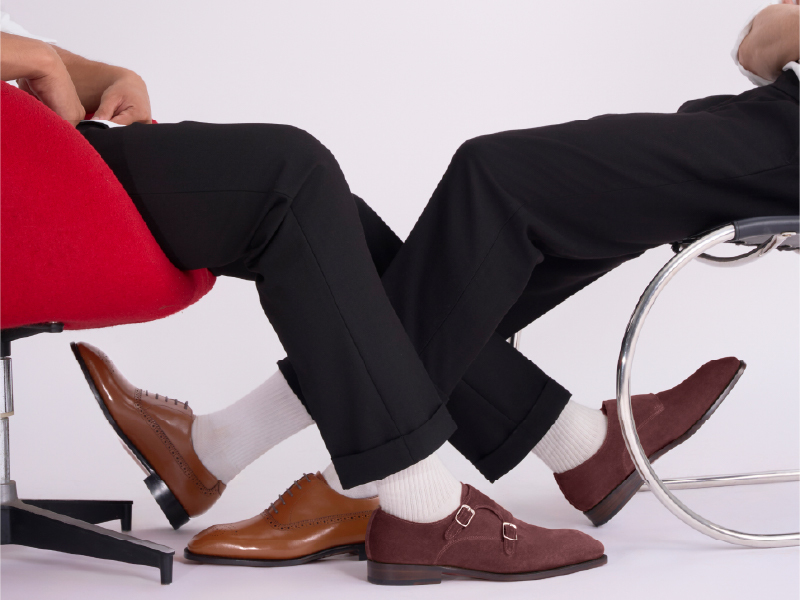
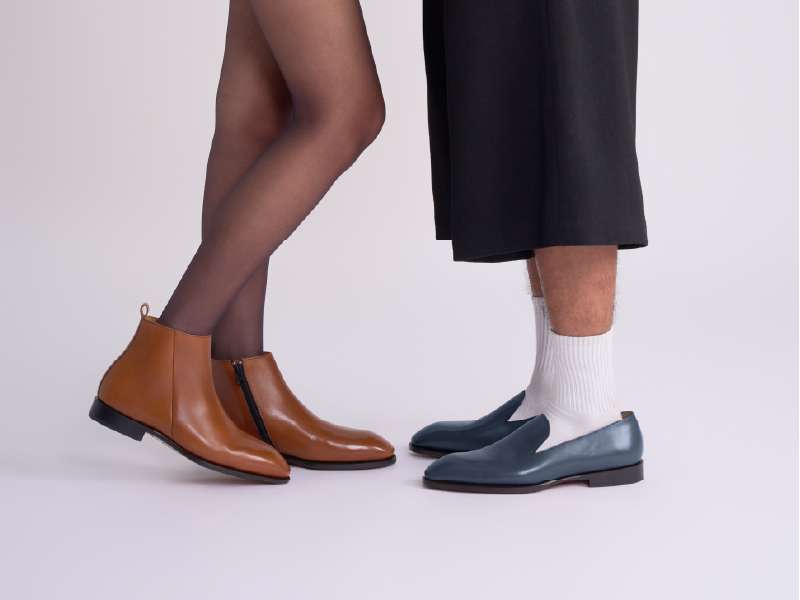
Designing starts with purpose: decide what the pair is for before you choose how it looks
How to Choose Each Part of the Shoe
A custom design feels complex until you separate it into its parts. Take them in this order — the sequence matters more than most people realize.
The Silhouette
Begin with the shape, because everything else is shaped by it. A Cap-Toe Oxford or Wholecut Oxford reads formal and is the natural choice for business and weddings. A penny loafer or horsebit loafer is slip-on and versatile. A Chelsea boot or chukka boot moves between formal and everyday. Choose the silhouette for the life the pair will lead, not for the photograph you admire.
The Leather
Leather is where a shoe finds its voice. Most makers work in three families: full-grain leather, which holds its structure and takes a deep, clean polish; suede, softer in mood and well-suited to loafers and warmer months; and patent leather, the high-gloss option reserved for evening. Beyond appearance, leather decides how a pair wears — good hide softens, creases gently, and develops a character no synthetic can imitate. Match it to your climate first and your taste second.
The Sole
The sole is the decision people most often underestimate. A leather sole is elegant and breathes well — the traditional companion to formal wear. A rubber sole grips and resists weather. Look for Goodyear welt construction either way: the welt lets a pair be resoled and kept for years rather than replaced. Decide where the pair will spend its days, and the sole almost chooses itself.
The Finishing Details
Here, the pair becomes unmistakably yours. Burnishing lends depth to the toe cap and heel; an edge color, broguing, hardware, or a discreet monogram each adds individuality. The discipline lies in restraint — one or two considered details read as taste, while a dozen competing ones read as indecision. The most refined pairs are very often the quietest.
The Fit
No amount of beautiful design survives a poor fit. Measure length, width, and instep, and follow the maker's guidance precisely. Fit rests largely on the shoe last beneath the design — the form the shoe is built around — so choose a maker that offers width options and, ideally, separate left-right sizing. Get it right, and the pair disappears on foot in the best possible way. For more, see our guide to the role of the shoe last.
You can choose your favorite style, leather, sole, finishing details, and the size that best fits
How to Build a Useful Pair: A Worked Example
Consider a first custom pair for daily office wear. The brief is clear: versatility and comfort, five days a week. The silhouette follows naturally — a Cap-Toe Oxford, formal enough for a meeting and restrained enough for everything else. The leather is a dark-brown full-grain, the most forgiving and adaptable tone in tailoring. The sole becomes a question of climate; in a wet city, a leather sole with a thin rubber underlay offers elegance without surrendering grip. The finishing is deliberately minimal — a subtle burnish at the toe, nothing more. The result is not the most adventurous pair imaginable, but it is the most useful: a shoe designed to be worn, not merely admired. That is the mark of a good first design.
Common Mistakes When You Design Your Own Shoes
- Letting design override fit — a beautiful pair that does not fit will sit unworn.
- Over-customizing — too many competing details dilute rather than distinguish.
- Ignoring climate — a leather sole in a wet climate is a short-lived pleasure.
- Forgetting maintenance — even the finest leather asks for conditioning, shoe trees, and rest between wears.
- Ordering too late — a made-to-order pair takes weeks; design well ahead of any occasion.
Frequently Asked Questions
How long does it take to design and receive custom shoes?
Designing a pair takes only minutes. The making takes longer — most made-to-order shoes arrive within four to eight weeks, since each pair is built only after the order is placed. Viettano typically delivers in around five weeks.
Can I design custom shoes if I have wide or uneven feet?
Yes — this is precisely where custom design earns its reputation. A good maker offers width options and, in many cases, separate sizing for each foot, addressing the small asymmetries that ready-made shoes ignore.
Is designing custom shoes worth it for a first-time buyer?
For anyone who wears dress shoes regularly, yes. A single well-designed, resoleable pair often outlasts and outperforms several cheaper ones. Our analysis of whether custom shoes are worth it examines the economics in full.
Conclusion
To understand how to design custom shoes is to understand that luxury is not excess but precision — the right silhouette, leather, and sole, chosen deliberately and made to order. Start with purpose, choose each part in turn, and edit without sentiment. When you are ready to put it into practice, you can customize a pair online or explore Viettano's custom dress shoes.